
English Bulldog puppy sleep: preparing for the first nights
Start with a quiet, comfortable resting space and a gradual transition from familiar company. Allow toilet breaks and respond to the puppy’s needs rather than expecting an immediate full night of sleep. Rest and breathing are different questions: suspected breathing difficulty needs veterinary advice, not sleep training.
By Casa Bulldog
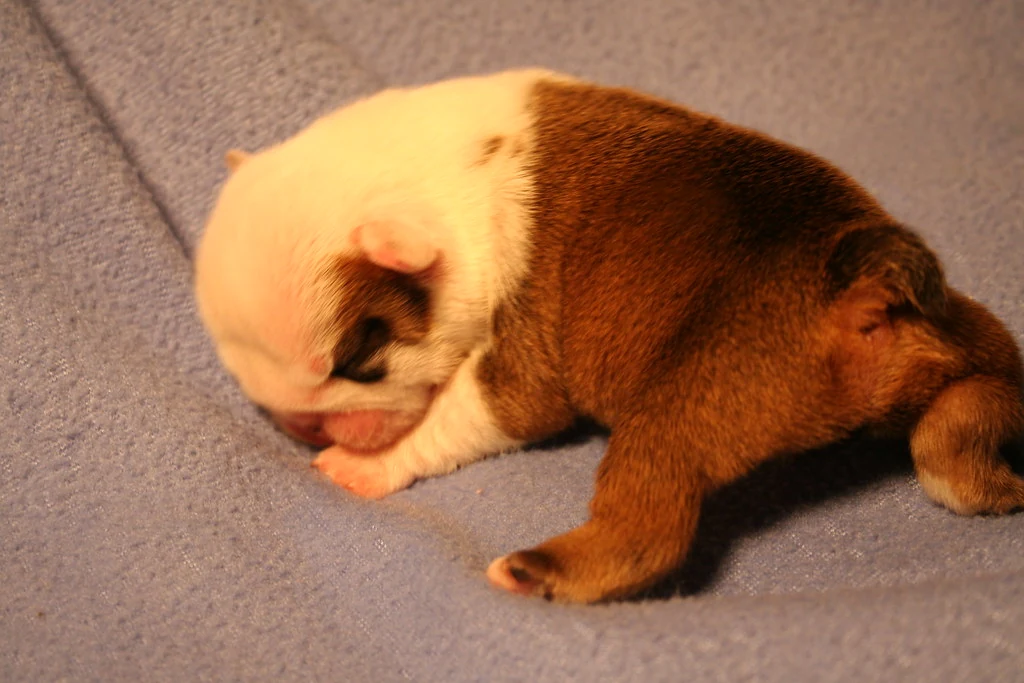
Your practical checklist
- Choose a clean, dry resting place away from draughts, direct heat and busy household traffic.
- Ask what sleeping arrangement and familiar cues the individual puppy has been used to.
- Plan calm evenings and a gradual change in sleeping arrangements; do not punish distress.
- Make a safe, supervised toilet route available at night and allow the puppy time to settle again.
Questions to take into a conversation
- Where does this puppy currently rest, and what changes would be least disruptive?
- What signs of breathing discomfort should my vet assess, rather than treating them as ordinary snoring?
What not to assume
Do not copy a newborn’s archive setting as a complete home-care plan or assume every puppy needs the same sleep schedule.
If breathing seems difficult, or the puppy cannot settle because it appears unwell, contact a veterinarian; urgent breathing trouble needs urgent care.
More puppy-care guides
Sources and further reading
- Dogs Trust — First nights with a new puppy
- RSPCA — Creating a good home for your dog
- University of Cambridge — BOAS recognition and diagnosis
Independent educational sources. They do not endorse this kennel; individual care decisions belong with your veterinarian.
This guide is general educational information. Discuss individual health and care with your veterinarian.